Educație brânzeturi

For a long time, I did not think Romanian cheese needed much explanation.
I knew it from the small markets of my childhood, from family meals, villages and mountain regions where cheese was part of everyday life rather than a subject of specialist discussion. Telemea, caș, cașcaval, urdă or brânză de burduf were familiar long before I had the vocabulary to describe them professionally.
That familiarity also meant that I rarely stopped to examine them closely.
My work in cheese education and, later, my experience as an international cheese judge changed that. The more cheeses I tasted outside Romania and the more conversations I had with cheesemakers, retailers, educators and judges from different countries, the more conscious I became of what makes a cheese culture visible beyond its own borders.
Quality is clearly essential. But I have seen many good cheeses remain almost unknown outside the places where they are made. Recognition also depends on how confidently a product is presented, whether its style can be understood and whether the people speaking about it have the language to explain what makes it distinctive.
I began returning to Romanian cheeses with questions I had not asked when they were simply part of everyday life. What had survived through local practice? What was changing? Which cheeses were still known mainly within their own regions? And what might an international cheese professional notice in them that a Romanian consumer, precisely because they were so familiar, might overlook?
Romania’s cheese culture is not new. My understanding of it is.
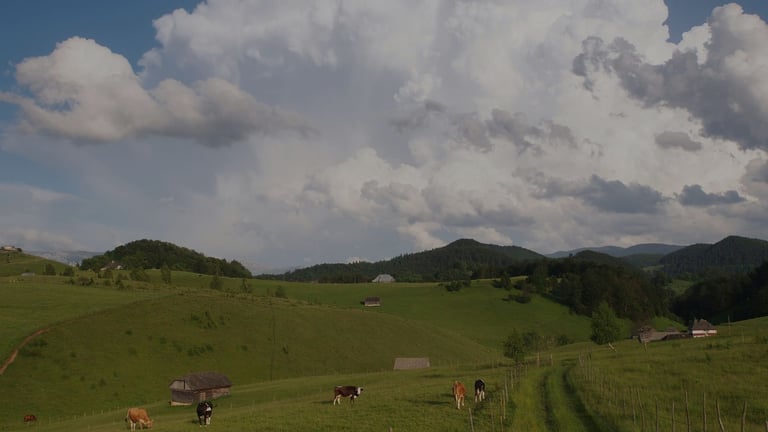 Romania’s geography has always influenced the way milk is produced and transformed into cheese.
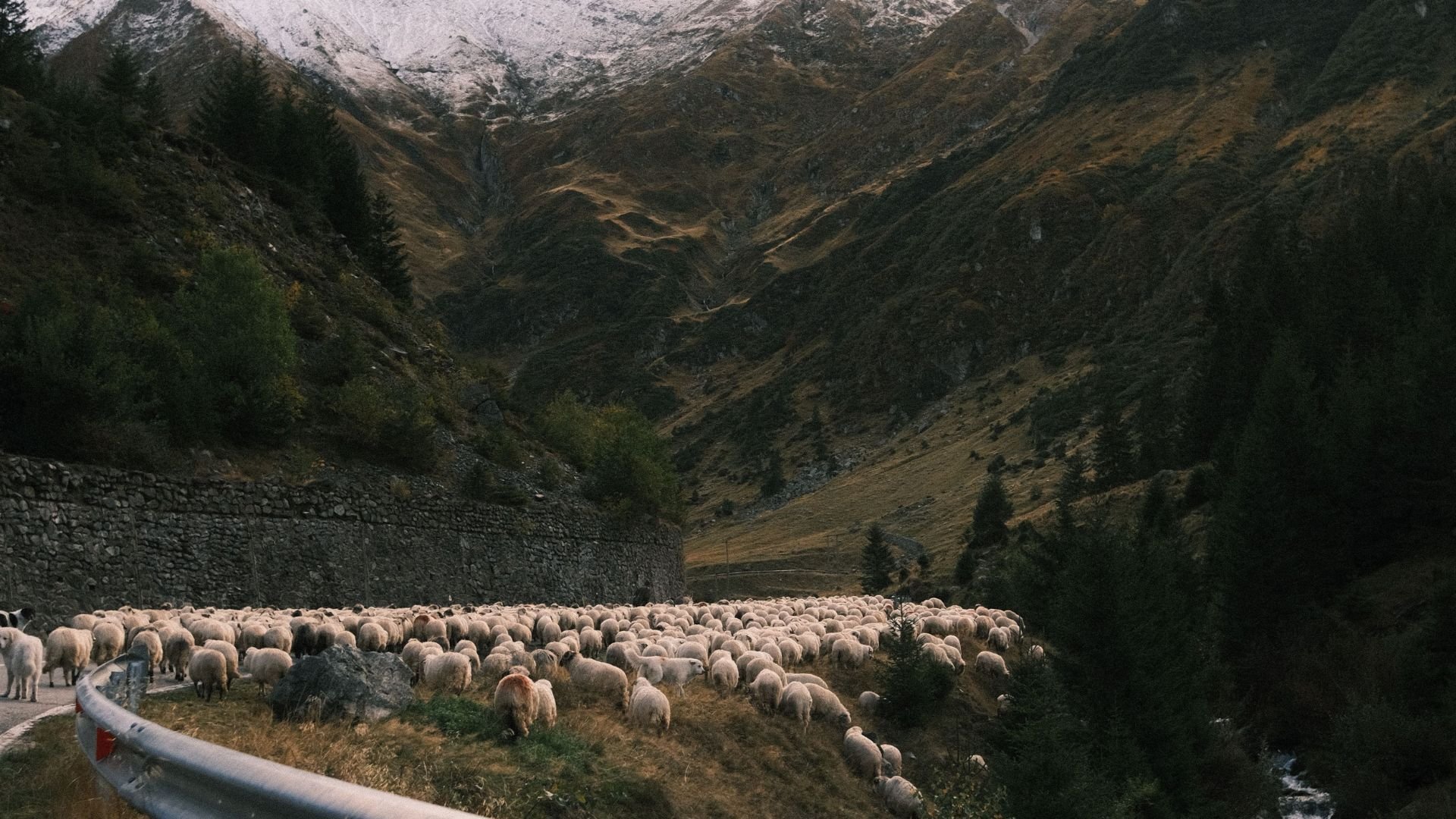
Mountain pastures, seasonal movement, small farms and local ways of working with milk have contributed to a wide range of products closely connected to place. Some are eaten fresh. Others are salted, smoked, matured or traditionally stored in fir bark, animal skin or wooden containers.
The familiar names do not always describe one precisely defined cheese.
Telemea, caș, cașcaval, urdă and brânză de burduf can vary considerably depending on the milk, region, season and producer. Two cheeses sold under the same name may differ in texture, acidity, salt, moisture or maturity, sometimes to such an extent that an international visitor might reasonably wonder whether they belong to the same style at all.
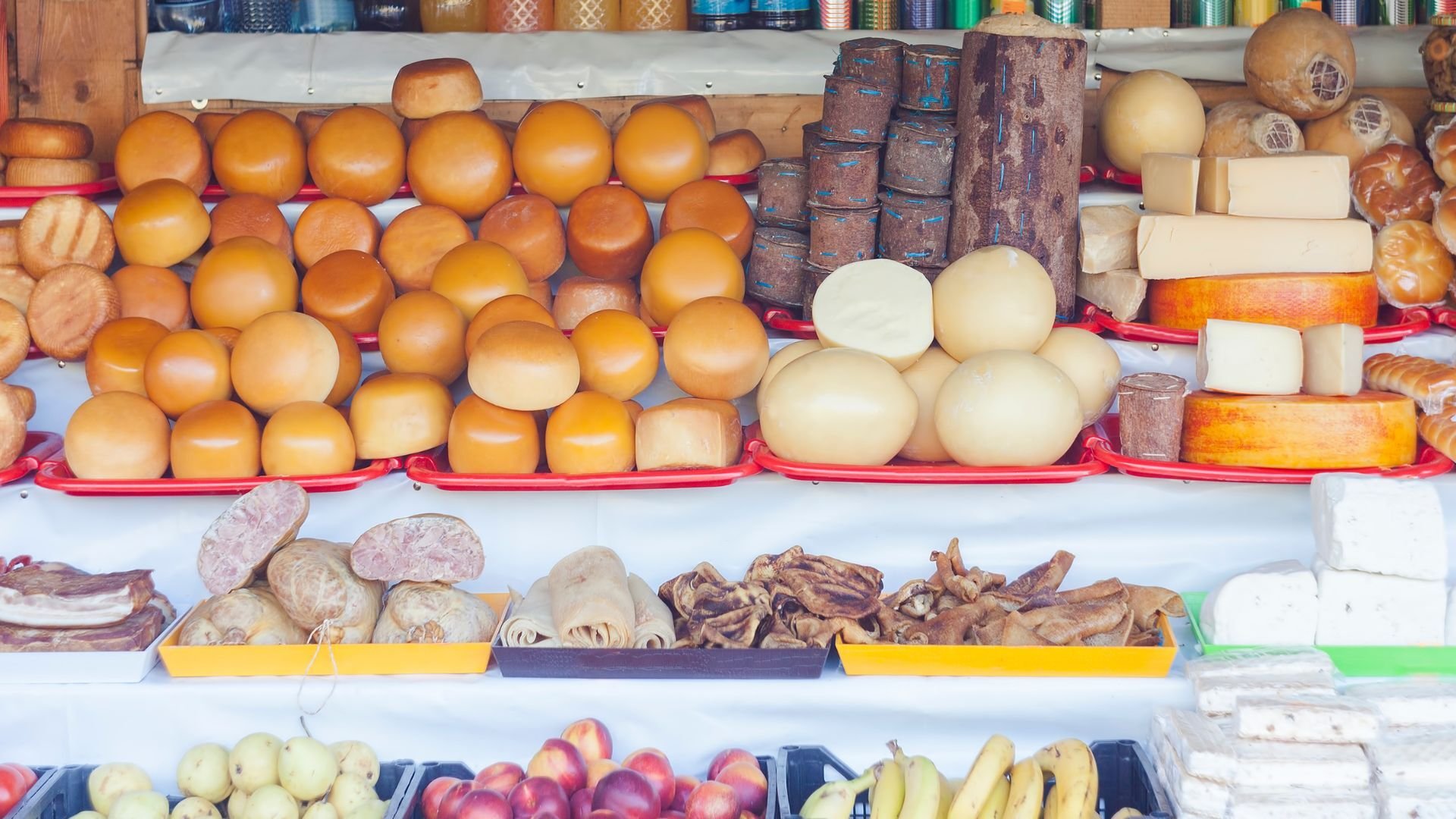 For international visitors, this diversity may initially require some explanation and this variation can make Romanian cheese difficult to explain, but it is also one of its most interesting characteristics.
The cheeses reflect the conditions in which they are made, and those conditions are not uniform. A mountain product made seasonally from sheep’s milk cannot be understood in exactly the same way as a cow’s milk cheese produced throughout the year on a lowland farm.
For people who grew up eating them, these distinctions may feel obvious or unimportant. For someone discovering Romanian cheese for the first time, they are often the beginning of the story.
When I first began looking more closely at Romanian cheese, the conversation was still dominated by a relatively small group of familiar products. That is no longer the whole picture. Alongside the traditional cheeses, a new generation of Romanian cheesemakers has been building a different part of the country’s cheese culture.
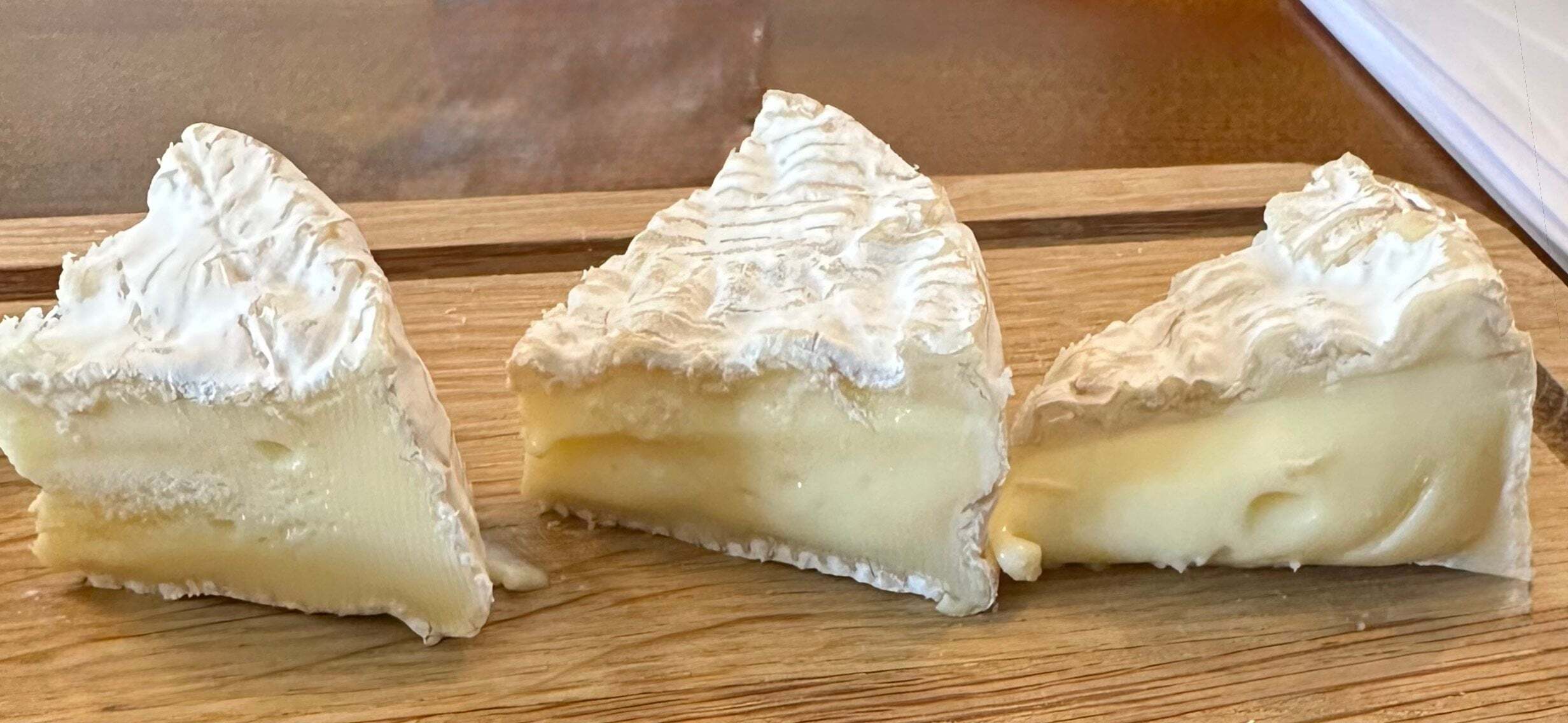
Many of them have now been making cheese for more than a decade. They are not simply experimenting with fashionable products or reproducing established European styles. They are developing their own ways of working with local milk, local conditions and the knowledge accumulated through years of production. Some make cheeses inspired by Alpine, British, French or Italian traditions. Others work with bloomy rinds, experiment with blue cheeses or produce long matured styles that once had very little presence in Romania.
The sources of inspiration are often easy to recognise, nor do they need to be hidden. Cheesemaking knowledge has always travelled.
What interests me is what happens after those methods arrive. They meet Romanian milk, a particular farm, a different climate and a cheesemaker who makes hundreds of small decisions over many years. The recipe changes. The rind behaves differently. The maturation period is adjusted. A batch fails, another works better, and gradually the producer develops a much more precise understanding of what the cheese can become. At that point, the product is no longer simply an attempt to reproduce a style learned elsewhere. It begins to acquire a history of its own. And these cheesemakers are building expertise that belongs to that particular farm and, over time, may become part of a wider regional tradition.
Tradition is often discussed as something inherited from the past. In practice, it also begins this way: with people repeating a process long enough to understand it, improve it and eventually pass that knowledge on.
The most interesting development in Romania is therefore not a choice between traditional cheeses and internationally inspired styles. It is the fact that they now coexist.
Established products preserve continuity and regional knowledge. Newer styles widen the range of Romanian cheese and offer different ways of expressing the character of local milk. Together, they show a cheese culture that is more varied and more experienced than the usual international image of Romania might suggest.
International cheese competitions have given me another way of looking at this development.
As a judge, I taste cheeses outside their usual context. I do not meet the producer first, see the farm or hear the story before tasting. The cheese has to communicate through its appearance, aroma, texture and flavour.
That can be demanding.
-1.jpg?width=1080&height=1080&name=Untitled%20(Instagram%20Post)-1.jpg) Judging at World Cheese Awards in Bern
Judging at World Cheese Awards in Bern
A compelling story cannot correct an unbalanced cheese. A beautiful label cannot compensate for poor texture. At the same time, a strong product can be disadvantaged by being entered into the wrong category, arriving in poor condition or being presented at a stage of maturity that does not show it at its best. Competitions reveal how clearly a cheese expresses its style and how it stands beside products from other countries. They also make consistency, condition and category choice impossible to ignore.
Over the years, I have had the privilege of judging at several international competitions and of working alongside professionals from many different cheese cultures. The conversations around the judging table have often been as valuable as the judging itself.
A cheese that seems familiar to one judge may be completely new to another. A texture regarded as desirable in one market may be interpreted differently elsewhere. Even the way people talk about balance, maturity or style can reveal the expectations of the cheese culture from which they come.
Those discussions have helped me understand how differently cheese can be valued, presented and positioned from one market to another. They have also encouraged me to think more carefully about what Romanian producers can contribute to the international cheese world.
During competitions and conversations with international colleagues, I am still often asked what Romanian cheese looks like beyond Telemea or brânză de burduf. The question is understandable. These are among the few names that have travelled. But the answer has become far more interesting over the past decade.
Why Romania is worth visiting for cheese
Romania is not a country most international cheese lovers would immediately think of visiting for cheese. That may be precisely why this is such an interesting time to discover it.
Cheese in Romania is often encountered through the places and people directly connected to it: farms, local markets, regional festivals and small producers. A journey might include tasting cheese made with milk from a small herd, noticing how seasonal production changes the final product or discovering a regional cheese that is rarely found outside the area where it is made.
These experiences are not identical from one place to another, and they should not be.
A mountain sheep’s milk cheese, a bloomy-rind goat’s cheese and a long-matured cow’s milk wheel tell very different stories about Romanian cheesemaking. What connects them is the opportunity to understand the milk, the place and the decisions of the producer more clearly.
Romania already offers many such experiences. What is still developing is the way they are made visible and connected, so that visitors can find them, understand what they are tasting and remember the people and places behind the cheese.
For me, one of the most interesting changes has been seeing these parts of Romanian cheese begin to come together. Traditional products are receiving more careful attention. Experienced cheesemakers are producing styles that once had very little presence in Romania. Education, international judging and contact with other cheese markets still need a lot of work, particularly in the way Romanian cheeses are described, selected and presented outside their immediate regions. But the foundation exists.
It is already being built by people who have spent years learning from their milk, their animals and their own production.
Romanian cheese is far broader than the handful of familiar categories most commonly associated with the country. It brings together long-established pastoral practices and a generation of cheesemakers who are creating new traditions through local milk, repeated practice and knowledge accumulated over many years.
My own perspective has changed alongside these developments.
I no longer look only at the cheeses that have endured. I also pay attention to the knowledge being built now: the recipes that have become more precise, the rinds that are better understood, the maturation decisions that have changed after years of observation and the products that may eventually become closely associated with the regions in which they are made.
Not every cheese will reach that point, and not every experiment needs to become a tradition.
But some already show what sustained work can produce.
Romanian cheese deserves to be presented with confidence, not because every product is exceptional and not because tradition alone guarantees quality, but because the country now has a much broader and more serious cheese story than is generally recognised internationally.
For anyone interested in cheese, landscape and food culture, Romania offers far more than most visitors expect. And, for the first time, I think we are beginning to have the language and the experience to explain why.